

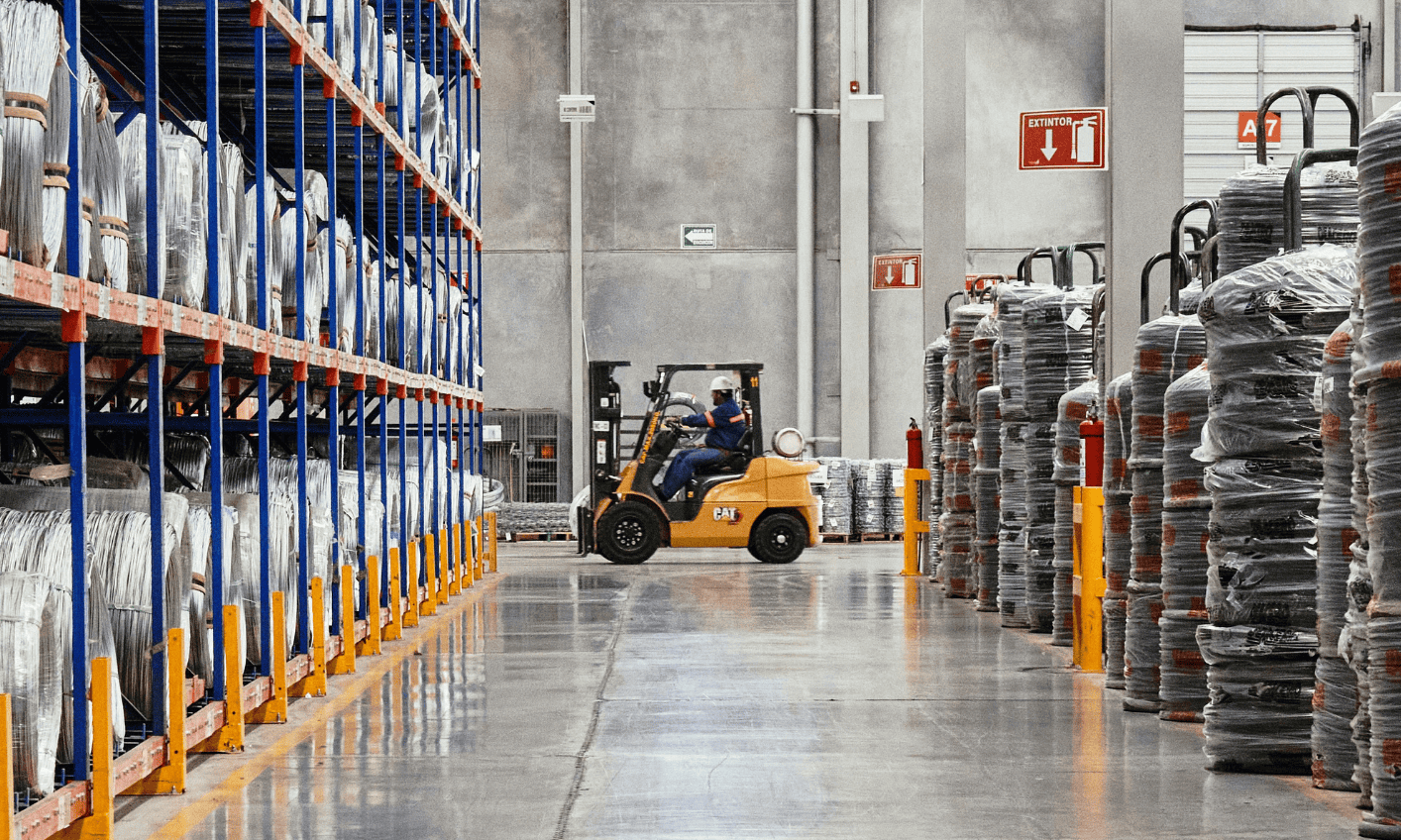

Warehouses can be fast-paced, noisy, and packed with moving vehicles, heavy loads, and racking systems. Even in the yard of the warehouse there can be multiple hazards, that pose a threat to employees and visitors to the premises. When safety procedures and training have not been followed, this can lead to accidents.
If you were injured whilst working in a warehouse or while visiting, you may be eligible for compensation.
Common warehouse accidents that lead to claims include:
- Slips, trips, and falls (wet floors, trailing straps/wrap, poor housekeeping, uneven surfaces).
- Manual handling injuries (lifting, carrying, twisting, repetitive strain, inadequate team-lifts).
- Falling objects (poorly stacked pallets, unstable loads, damaged racking, items falling during picking).
- Forklift and vehicle incidents (collisions, reversing accidents, pedestrian impacts, inadequate space for machinery).
- Racking and shelving failures (overloading, poor installation, lack of inspections/maintenance).
- Machinery and equipment injuries (conveyor belts snapping, pallet trucks falling, compactors, personal protective equipment not provided).
- Work-at-height accidents (ladders, mezzanines, loading bays, unprotected edges).
- Exposure injuries (chemicals, dust, fumes) and burns (battery charging areas, hot works).
- Accidents in the yard (Spilt substances, unsafe yard gates).
Who can make a warehouse injury claim?
Claims can arise from accidents affecting employees, agency/temporary workers, contractors, delivery drivers, and even members of the public (for example, whilst visiting a trade centre).
If the Injury has been caused by the actions of a colleague, your employee may be vicariously liable for their actions.
A third party may be involved too—such as a forklift driver employed by a different company, a maintenance contractor, or an equipment supplier.
If you are a visitor to the premises, the Occupier may be liable for any injuries sustained under the Occupiers Liability Act 1957.
What do you need to prove?
In order to be successful with a claim the following need to be considered:
- A duty of care – the business responsible for the warehouse must take reasonable steps to keep employees and visitors safe whilst on the premises.
- A breach of that duty –poor training, unsafe systems of work, lack of maintenance, understaffing, or inadequate supervision can lead to a breach of that duty of care.
- Causation – the breach must have caused or materially contributed to your injury.
In practice, liability might be supported by things like missing pedestrian/vehicle segregation, poor housekeeping, no safe lifting plan, defective pallet trucks, blocked emergency routes, or a failure to carry out suitable risk assessments and inspections.
Evidence that can assist with proving the claim
- Report it: ensure the incident is recorded in the accident book
- CCTV and telematics: ask for footage to be preserved quickly. Many businesses retain CCTV for 30 days, so it is important the ask for the CCTV footage to be retained.
- Photos/video: the defect or hazard, signage, lighting, floor conditions, racking damage, load condition, footwear/PPE.
- Witness details: names, contact information, brief notes of what they saw.
- Medical evidence: A&E/GP notes, physio records, prescriptions, and how symptoms affect daily life.
- Financial evidence: wage slips, overtime loss, travel/parking, care costs, receipts for equipment or treatment.
Time limits (limitation)
For personal injury claims Court proceedings must be started within three years of the accident date (or from the date you first realised your injury was connected to the incident). There are exceptions—for example, different rules can apply for children and for people who lack mental capacity. Even where you are within time, acting quickly helps to preserve evidence.
What compensation can include
Compensation is usually split into two broad categories:
- General damages: for the pain, suffering, and impact on your day-to-day life. The compensation will be calculated base on the prognosis given by a medical expert.
- Special damages: for financial losses and expenses, such as lost earnings (including overtime/bonuses), travel costs, medication and treatment, private rehab where appropriate, care provided by family, and—if the injury is serious—future loss of earnings and long-term support needs.
What to do after a warehouse accident
- Get medical attention and follow clinical advice.
- Report the incident as soon as possible and keep a copy/photo of the report if you can.
- Write down what happened while it’s fresh (time, location, task, equipment involved).
- Keep damaged PPE/footwear and don’t repair or dispose of relevant items until you’ve taken photos.
- Ask that CCTV is preserved.
- Keep receipts and track time off work.
How can Gorvins help with your claim?
Here at Gorvins, we possess a highly experienced team of personal injury solicitors and lawyers who have worked for many years in helping people who have been injured in warehouse accidents.
Our expertise means we are able to manage your case extremely effectively, providing you with updates and the service that you expect. Also, we offer a No Win No Fee basis, ensuring that justice is accessible to all, regardless of their financial situation.
Start your claim today
Contact Gorvins today on 0161 930 5151 for a free, confidential consultation. Alternatively, fill in our online contact form, and one of our personal injury experts will get back to you as soon as possible. Let us help you secure the compensation you deserve to move forward with confidence.